What propulsion system should I choose for my motorboat?
RivieraBroker analysis based on real use and experience in the field
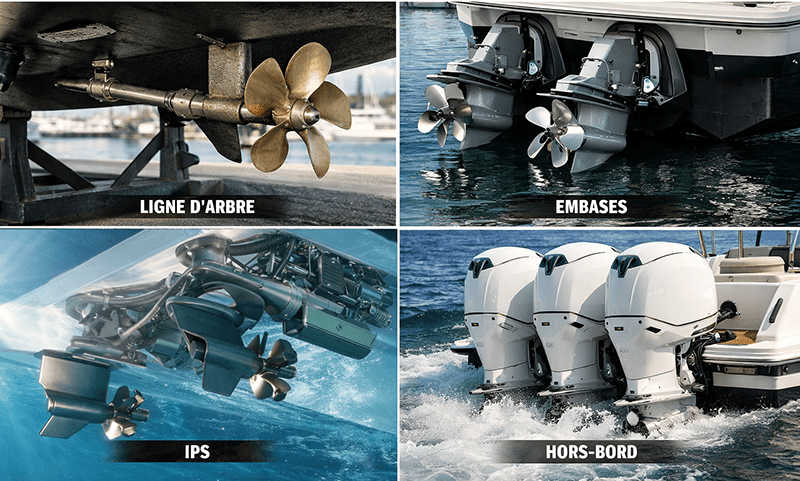
The choice of propulsion system is one of the most decisive criteria when buying a motorboat. However, it is often underestimated in favour of the model, make or general appearance.
There is no universal solution.
Each system responds to a precise navigation programme. Here's our detailed analysis of the four main propulsion systems in use today.
At RivieraBroker, we regularly find that the type of propulsion influences :
- navigation comfort,
- ease of use on a day-to-day basis,
- the long-term maintenance budget,
- reliability,
- and the resale value of the boat.
The shaft line: the benchmark for reliability
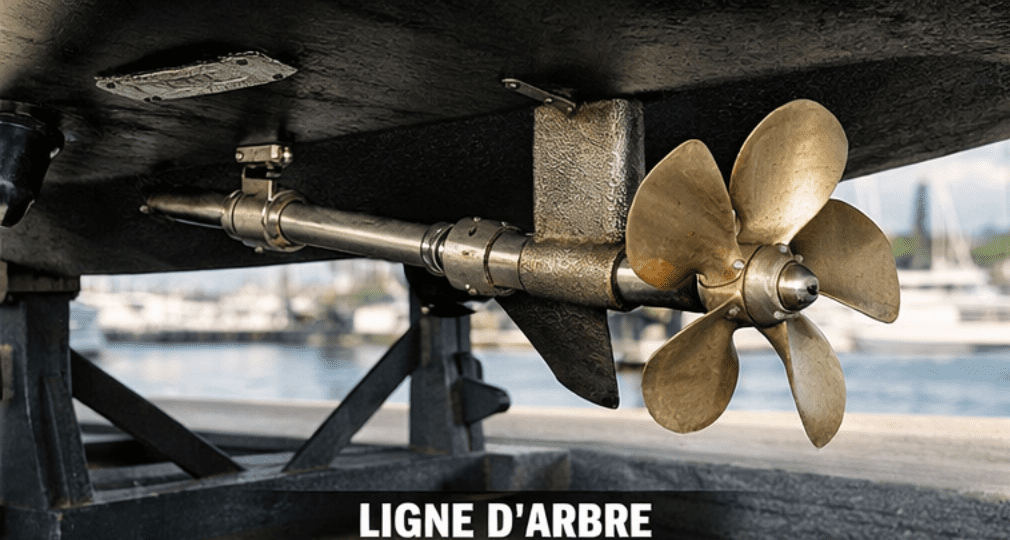
Line shaft propulsion is the oldest and most proven inboard system. The engine transmits its power directly to a propeller via a fixed shaft running through the hull.
What we see on the ground:
Shaftline boats generally age best. They are particularly appreciated for their seaworthiness and robustness.
Concrete benefits
- High mechanical reliability
Fewer complex components, less risk of serious breakdowns. This system can withstand many hours of operation. - Easy to understand and anticipate maintenance
The operations are known, plannable and achievable in the majority of nautical projects. - Excellent sea keeping
Low centre of gravity, increased stability, reassuring handling in rough seas. - Good image on the second-hand market
The tree line remains a guarantee of seriousness for many buyers.
Limits to be taken into account
- Higher consumption to that of more modern systems
- Less intuitive port manoeuvres, especially in single-engine versions
- More modest performance, with little focus on speed
👉 Our opinion RivieraBroker
The shaft line is ideal for yachtsmen looking for reliability, longevity and smooth sailing, particularly when cruising.
Subbases: performance and technical compromise
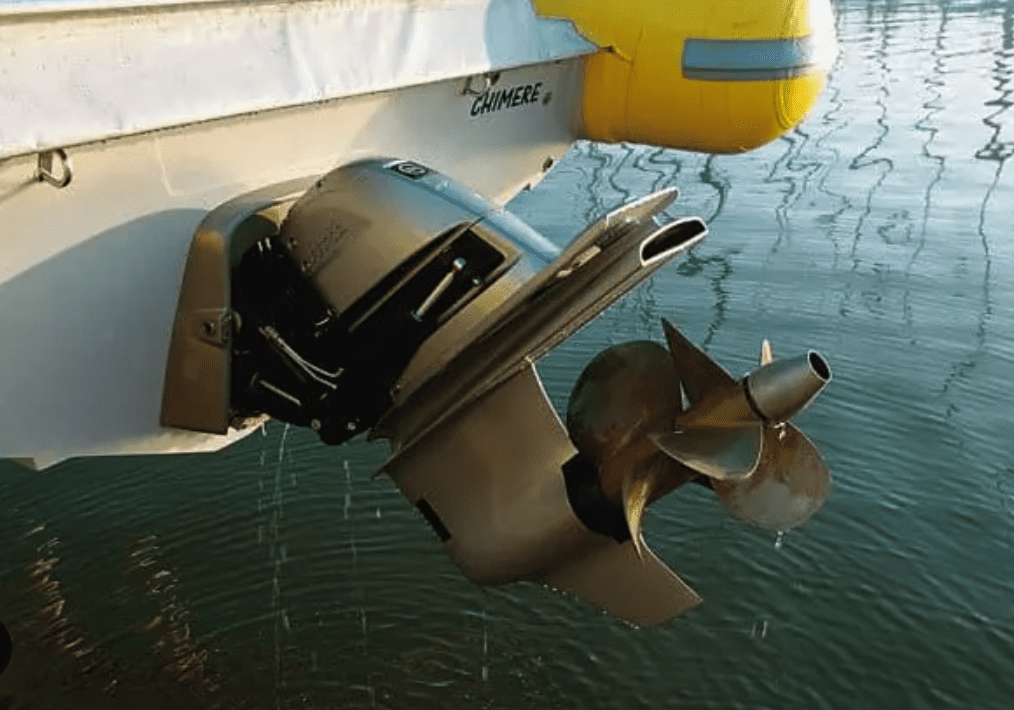
Subbases combine an inboard motor with a steerable transmission located at the rear of the boat. They offer better performance than shaft drives, but at the cost of greater complexity.
This is something we frequently observe:
When they're well looked after, base-mounted boats are great fun to sail. On the other hand, neglected maintenance can quickly become costly.
Concrete benefits
- Superior hydrodynamic efficiency
By adjusting the trim, you can optimise trim and fuel consumption. - Best performance
Higher speed for equivalent motorisation. - Improved manoeuvrability
The orientation of the base makes manoeuvring easier at low speeds. - Optimising space on board
Engine compartments are often more compact.
Points to watch
- More demanding maintenance
Bellows, seals, shafts and corrosion need to be carefully monitored. - Increased sensitivity to salt water
In the Mediterranean, wear and tear is faster than in freshwater. - High costs in the event of breakdown
Damage can quickly add up to a substantial budget. - Resale can be tricky
Savvy buyers are cautious about this type of drive.
👉 Our opinion RivieraBroker
The bases are suitable for regular coastal sailing, provided they are maintained and documented to a high standard.
The IPS system: comfort, precision and technology
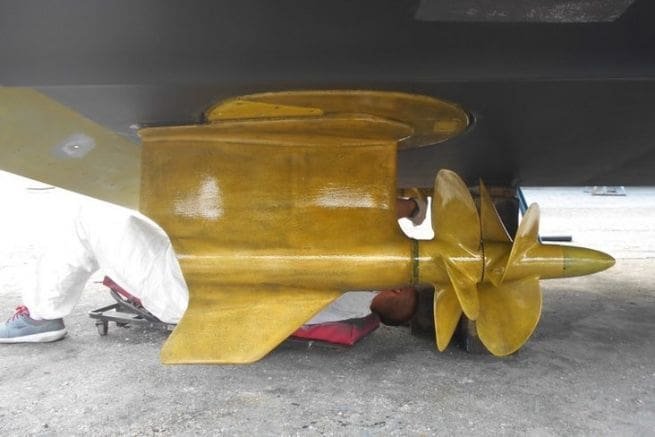
The IPS (Inboard Performance System) is based on steerable pods equipped with tractive propellers, generally linked to a joystick.
Feedback from RivieraBroker:
Homeowners really appreciate the ease of operation and comfort. On the other hand, the overall cost of the system has to be fully assumed.
Concrete benefits
- Exceptional manoeuvrability
The joystick allows very precise manoeuvring, even in cramped harbours. - Optimised performance
Forward-facing propellers improve efficiency and reduce fuel consumption at cruising speed. - High level of navigation comfort
Less vibration, better soundproofing, smoother sailing. - Adding value to your boat
IPS-equipped units are highly sought-after on the recent market.
Constraints to be aware of
- High acquisition and maintenance costs
- Heavy reliance on on-board electronics
- Compulsory specialist maintenance
- Sensitivity to underwater impact, with potentially major repairs
👉 Our opinion RivieraBroker
IPS is an excellent solution for modern yachts, provided you accept a higher operating budget.
Outboard propulsion: simplicity and modern versatility
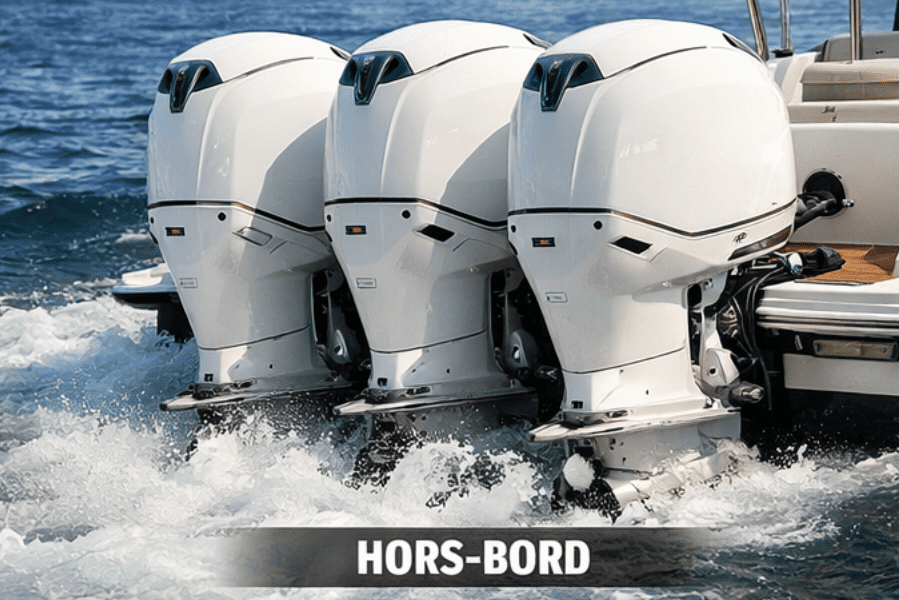
Long the preserve of small craft, outboard propulsion is now being used on larger and larger boats.
What we see in the market
The outboard seduces with its simplicity, flexibility and performance, particularly for leisure use.
Concrete benefits
- Mechanical simplicity
The motor is easily accessible, removable and replaceable. - Excellent power-to-weight ratio
Crisp acceleration and good performance. - Easy maintenance
Quick response, less downtime. - Versatility of use
Day trips, fishing, fast boating. - Shallow draft
Suitable for shallow areas.
Limits to consider
- Higher fuel consumption at high engine speeds
- Weight concentrated at the rear, influencing the plate
- Exposure to impact and theft
- Less consistent for large cruise ships
👉 Our opinion RivieraBroker
The outboard is a modern solution, ideal for dynamic and flexible boating.
Conclusion: a strategic choice, not just a technical one
The choice of propulsion must always be consistent with :
- the actual navigation programme,
- the navigation zone,
- the overall budget (purchase, maintenance, resale),
- the owner's experience.
At RivieraBroker, We analyse these factors before proposing a boat, to avoid making inappropriate or costly choices in the long term.
📩 Are you planning to buy or sell?
Contact RivieraBroker for personalised, objective support.