Marine engine heat exchangers
Marine engine heat exchangers
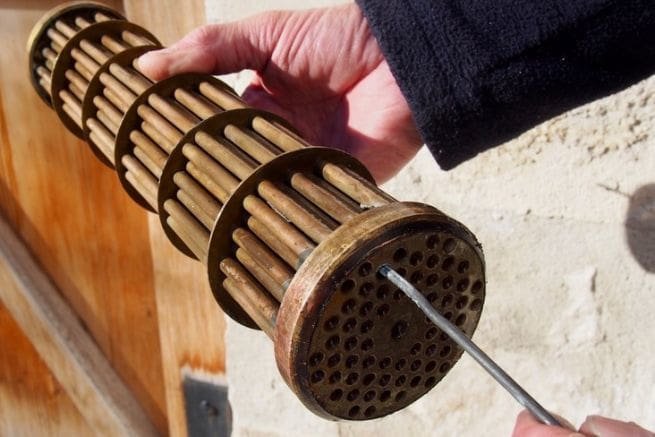
The discreet hero who keeps your engine from melting down
When it comes to yachting mechanics, we often talk about engines, horsepower and fuel consumption... and much less about what makes them possible. the engine to survive. The heat exchanger is one of those invisible but essential parts. When it's working well, nobody talks about it. When it's not, the bill arrives with a big smile.
1. What is the purpose of a marine engine heat exchanger?
A marine engine, whether diesel or petrol, produces an enormous amount of heat. On land, we use air and a radiator... At sea, we have something better at hand: water, in unlimited quantities and free of charge.
But be careful:
👉 Seawater should never be circulated directly through the engine. (or express corrosion, accelerated version). That's where the exchanger comes in.
Simple principle:
- The engine runs with a closed circuit of fresh water + coolant
- Seawater circulates in a separate circuit
- The two never mix
- The heat passes from one to the other via the heat exchanger
The result: a cooler engine, less corrosion and a longer service life. Thermal magic, but implacable logic.
2. How is a marine exchanger made?
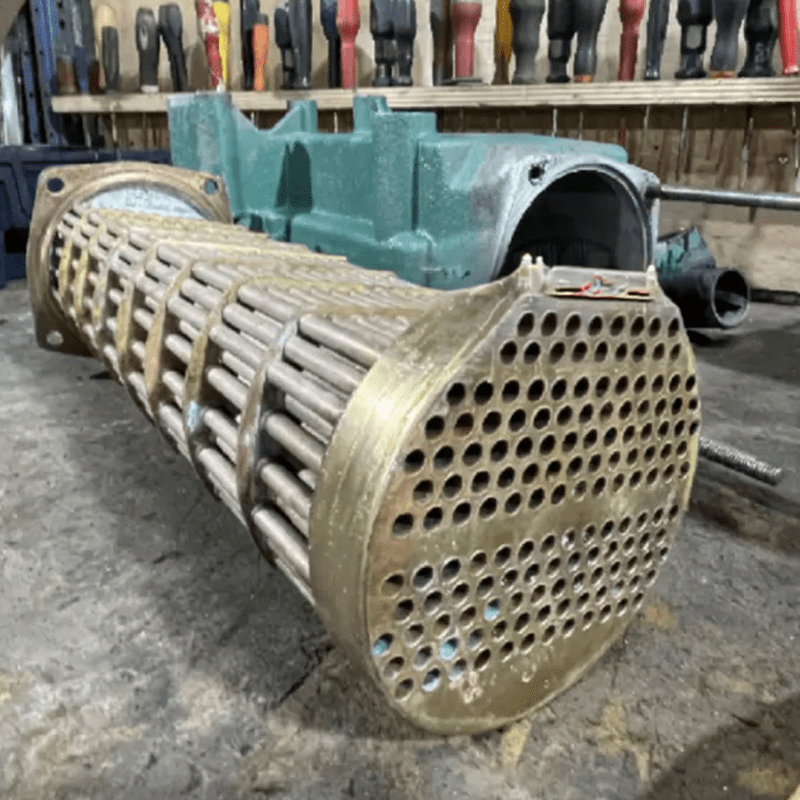
A heat exchanger is generally made up of:
- A cylindrical body (often made of brass, copper-nickel or stainless steel)
- A bundle of internal tubes
- Removable end caps
- Seals (which age, of course)
How it works:
- Hot engine fluid circulates around the tubes
- Cold seawater circulates inside the tubes
- Heat passes through the walls
- The seawater is warm again... and the engine stays cool
It's simple, effective and very sensitive to dirt.
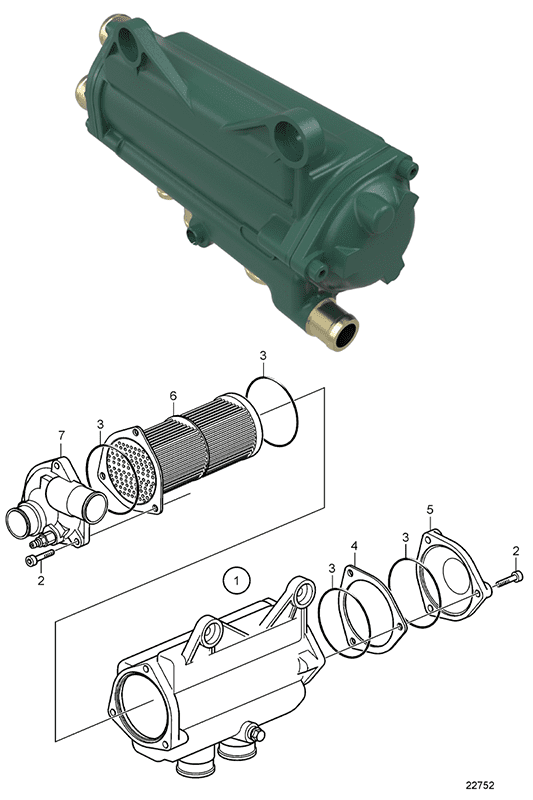
3. The different types of exchanger in pleasure boating
🔹 Conventional tube exchanger
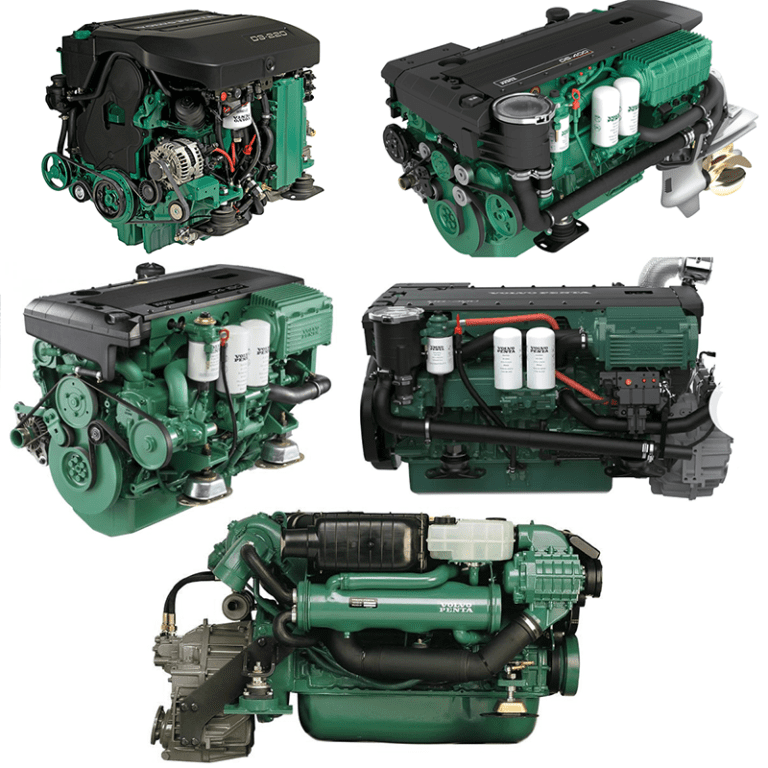
Most common on inboard engines (Volvo Penta, Yanmar, Cummins, Perkins...).
✔️ Reliable
✔️ Repairable
✔️ Cleanable
👉 Provided you do, that is.
🔹 Integrated heat exchanger
Often on compact or saildrive engines.
✔️ Space-saving
❌ Access sometimes difficult
❌ More expensive replacement
🔹 Exchanger + aftercooler (double exchange) On turbo engines:
- A heat exchanger for the engine
- Another to cool the intake air
👉 Performance OK, but double maintenance.
4. Why do interchanges become a problem over time?
Because the sea is not your friend.
Main enemies:
Salt, Sand, Seaweed, Shellfish (yes, shellfish), Electrolysis, Incorrect rinsing
Total lack of maintenance (so often...)
Result:
Partially blocked tubes, Reduced heat exchange, Engine overheating, Alarm, Stress, Danger, Bleeding bill...
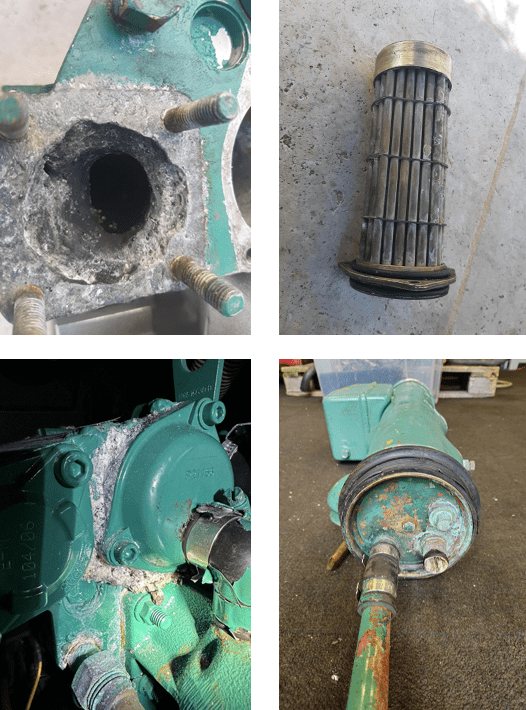
5. Symptoms of an exchanger at the end of its service life
An exchanger doesn't give long warning, but it does leave a few clues:
- Engine temperature higher than usual
- High-speed overheating alarm
- Correct seawater flow but insufficient cooling
- Traces of corrosion on caps
- Joint leaks
- Coolant that mysteriously disappears
❗️ If you tick more than two boxes, it needs to be dealt with urgently!
6. Maintenance: what to do (and what is too often forgotten)
🔧 Recommended maintenance
- Dismantling and cleaning every 3 to 4 years (depending on use) with appropriate mechanical or chemical unblocking
- Replacement systematic seals
- Regular visual check
- Check internal anodes if present
❌ Classic errors
- Waiting until the heat is on before taking action
- Cleaning with acid any old way
- Refitting old seals
- Forgetting to rinse with fresh water after the season
- Confusing a heat exchanger with an exhaust elbow (it happens, sadly)
7. Clean or replace: how do you decide?
Sufficient cleaning if:
✔️ Intact beam
✔️ Surface corrosion
✔️ Moderate deposits
Replacement recommended if:
❌ Drilled tubes
❌ Advanced corrosion
❌ Internal leaks
❌ Very old original exchanger
A tired exchanger can kill an expensive engine.
It doesn't take long to do the maths.
8. Direct impact on the value of a boat
On the second-hand market, an interchange:
👉 maintained
👉 dismantled
👉 documented
immediately reassures a serious buyer.
On the other hand, an engine that heats up or a heat exchanger that has not been touched for more than 5 years will trip:
✔️ negotiation
✔️ distrust
✔️ quote
✔️ discount
And often all at the same time...
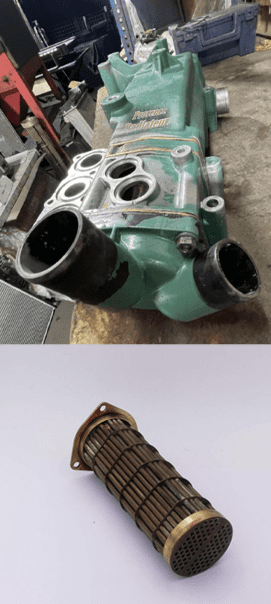
9. Advice from the mechanic (the one who sees the damage)
A heat exchanger is not a glamorous consumable. But they are:
✅ it's cheaper than a cylinder head gasket
✅ less expensive than an engine
✅ cheaper than an unsaleable boat
👉 Prevention is always better than cure, especially when salt water is involved.
In a nutshell
The heat exchanger is your marine engine's thermal safeguard.
Invisible, discreet, thankless, but indispensable.
Ignoring it is like playing mechanical Russian roulette.
Maintaining it simply means being rational.
And in yachting, rationality is already a form of luxury.
That's all there is to it. You can go back to looking at your engines with a bit more respect now.