Diesel or petrol at €2 per liter?
The real comparison with a concrete case : Jeanneau Leader 8 (2010)
At RivieraBroker, one question comes up again and again whenever fuel prices rise:
diesel or petrol, is it still a real issue today?
Rather than answering with preconceived ideas or ready-made phrases, we chose a simple and practical approach:
take a specific boat, with two real engine options, and compare objectively.
🔷 One real case, two clearly distinct choices
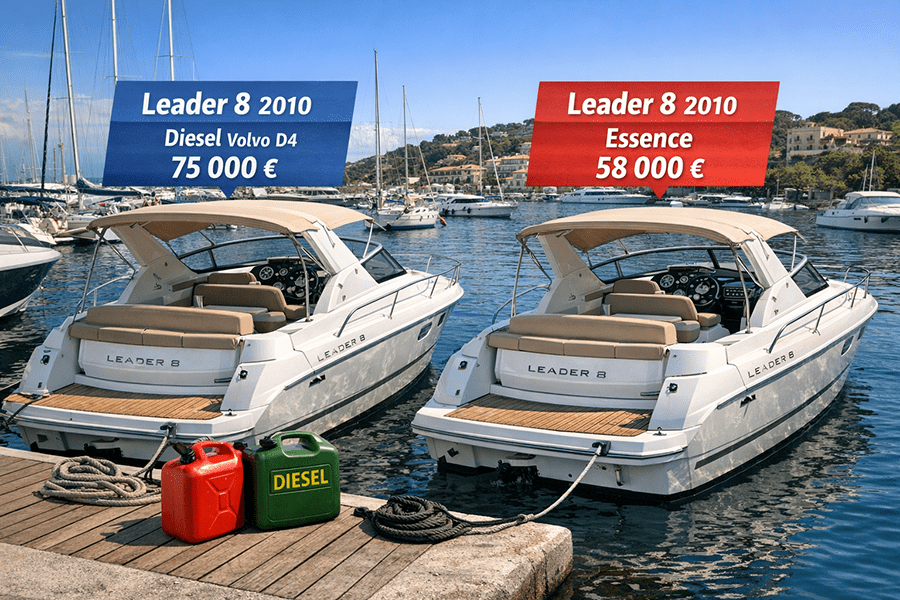
Here we take the example of a Jeanneau Leader 8 - year 2010, a very widespread, versatile model, well known among boaters.
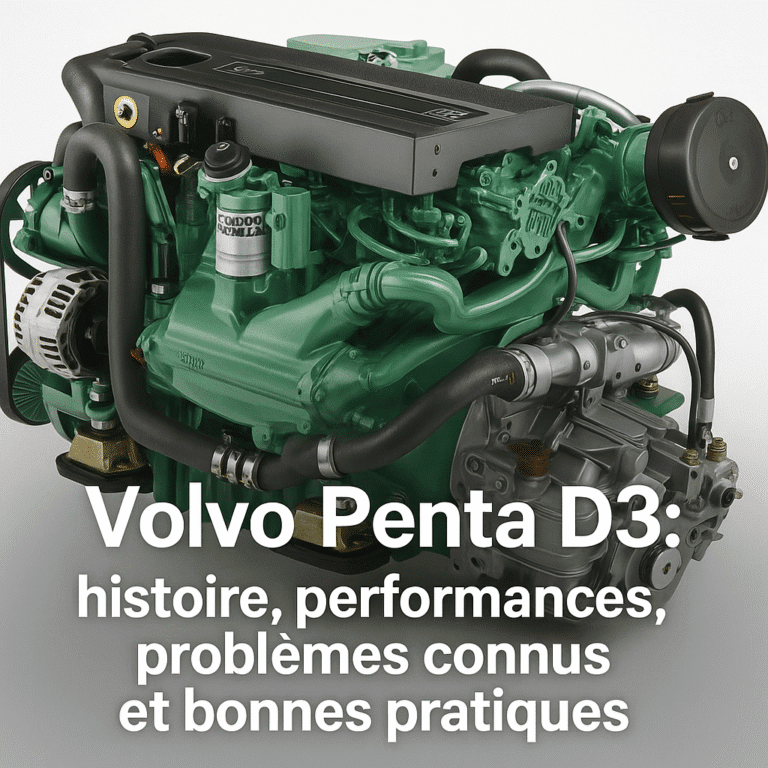
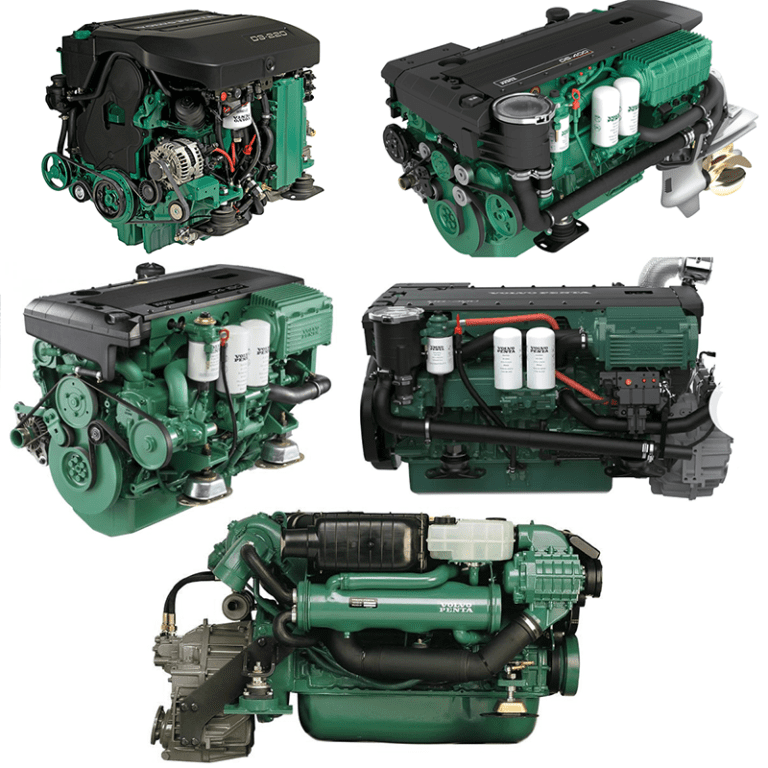
👉 Diesel version equipped with a Volvo Penta D4, listed at 75 000 €
👉 Petrol version equipped with a Volvo Penta V8 5.7 – 320 hp, listed at 58 000 €
Same boat, same year, same volumes… but €17,000 difference at purchase.
The question is therefore not theoretical, but very concrete.
Fuel at €2 per liter: what really changes
On a properly maintained Jeanneau Leader 8, fuel consumption at cruising speed and in equivalent conditions is relatively close:
the diesel D4 generally consumes between 28 and 30 litres / hour or 56 to 60 €/hour
The V8 petrol generally consumes between 35 to 37 litres / hour or approximately €70 to €74/hour.
Contrary to what is often said, the difference in hourly cost is not huge, as long as usage remains reasonable.
The difference becomes more significant mainly when cruising fully loaded, for long periods, or at higher engine speeds.
Range and comfort at sea
With its 300-liter fuel tank, the Leader 8 offers comfortable range in both configurations.
In practice, diesel allows a bit more margin, with a more relaxed cruising style and an engine running at lower RPM. The available torque makes cruising more consistent, especially with several people on board or in rougher sea conditions.
The petrol version, on the other hand, proves to be more responsiveunder acceleration.
It is an enjoyable engine option for quick outings, water skiing, or short and dynamic cruises.
The key point: the purchase price gap
The €17,000 difference between the two versions are decisive.
With a small difference in consumption under normal use, it would take hundreds, if not thousands, of hours to offset this difference solely through fuel savings.
On the other hand, for a boater who cruises a lot, over long distances or at sustained engine speeds, the real fuel consumption of a petrol engine can increase significantly.
In this case, diesel fully regains its economic logic over the long term.
Maintenance, reliability and peace of mind
The version petrol appeals for:
👉 a more affordable purchase price
👉 often simpler mechanics
👉 generally moderate maintenance costs for leisure use
However, it does require consistent use and regular maintenance, particularly on components sensitive to heat and high engine speeds.
THE diesel, on the other hand, is designed to last:
👉 better efficiency under load
👉 well-known longevity
👉 more consistent behavior over time
In return, maintenance is more technical, and some interventions can be more expensive if neglected.
The RivieraBroker advice
If your cruising program consists of occasional outings, weekends and coastal pleasures, with less than 100 hours of navigation per yearthe petrol version at €58,000 is often the most rational choice.
It leaves room in the budget for maintenance, equipment and unforeseen expenses…
If you cruise regularly, go cruising, rack up engine hours and are primarily looking for comfort and consistency, the diesel version makes complete sense despite a higher purchase price.
At €2 per liter, the diesel vs petrol debate is not settled by fuel price alone.
In this specific case, it is real-world use and the purchase price gap that should guide the decision., far more than preconceived ideas.
At RivieraBroker, our role is simple:
to help you choose the boat that matches your way of cruising, not the one that looks good on paper.
⚓ RivieraBroker – expertise, advice and informed decisions.