VOLVO D3 or D4 ENGINE
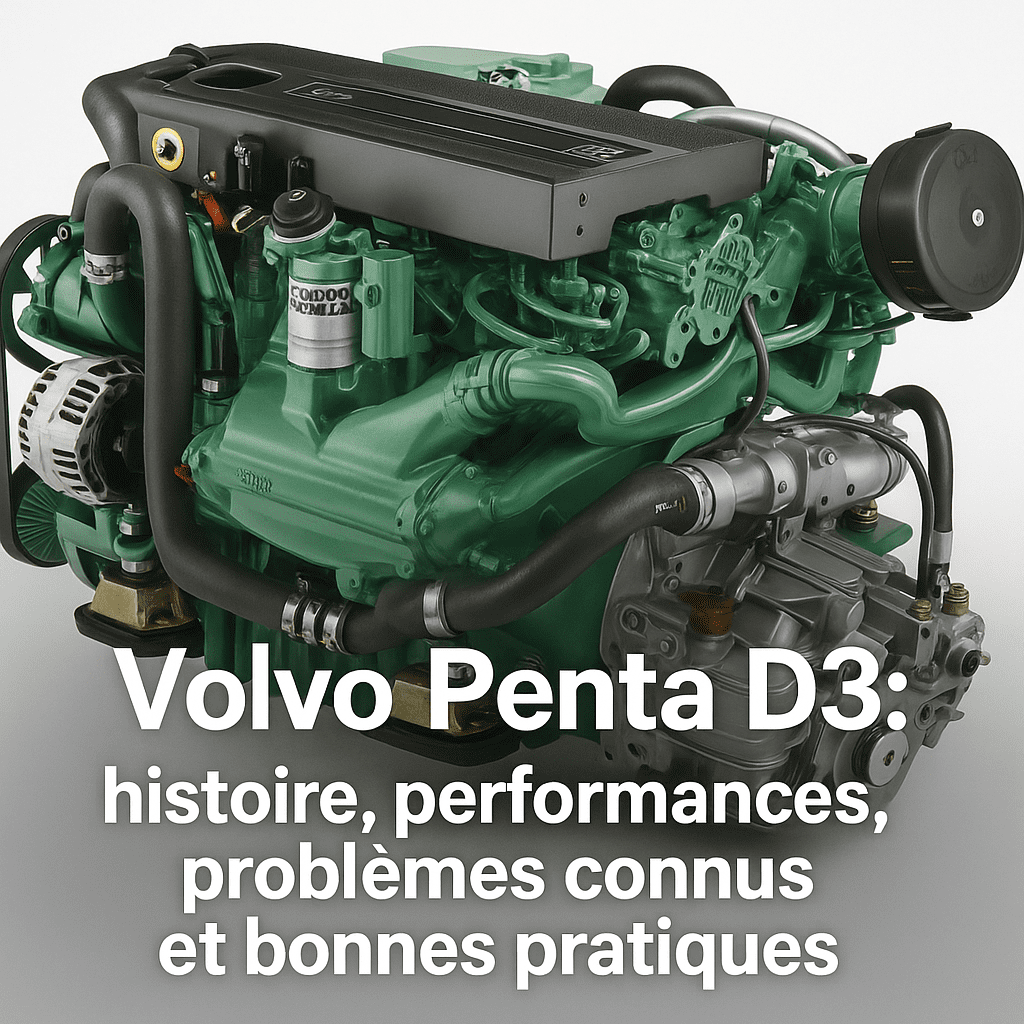
Volvo Penta D3: history, performance, known issues and best practice
A complete guide to understanding the Volvo Penta D3 engine, evaluating a boat equipped with this model and avoid common mistakes when buying or servicing.
1. The origins of the Volvo Penta D3
The Volvo Penta D3 appeared in the mid-2000s. It is based on a Volvo Volvo 2.4-litre, 5-cylinder engine with common rail injection, then adapted for use in the marine environment. The aim was clear: to offer a modern diesel engine that was compact, light, quiet and efficient for small and medium-sized boats.
It is mainly found on 25 to 32-foot speedboats, top-of-the-range RIBs, sporty opens and multi-purpose craft where the power-to-weight ratio is essential.
2. The different versions and powers of the D3
All D3 engines share the same 2.4-litre block. The differences lie in the mapping injection pressure and turbo management.
- D3-130: 130 bhp
- D3-160: 160 bhp
- D3-190: 190 bhp
- D3-200: 200 bhp
- D3-220: 220 bhp
The 190 bhp and 220 bhp versions are currently the most sought-after, as they offer a good compromise between performance, comfort and technical maturity. compromise between performance, comfort and technical maturity.
3. Volvo D3 highlights
Despite its sometimes “touchy-feely” reputation, the D3 has a number of real strengths that explain its commercial success commercial success.
Lightweight and compact
The D3 is very light for its power. This characteristic directly benefits the boat's performance the boat's performance, fuel consumption and overall handling.
Controlled consumption
Thanks to common rail injection and electronic management, the D3 consumes less fuel than many older engines of equivalent power. than many older engines of equivalent power. For a fast cruising programme, this is a major advantage.
Sound and comfort
The five-cylinder offers a softer, more “automotive” sound than a classic four-cylinder. four-cylinder engine. On board, this means less vibration and greater comfort.
Dynamic nature
On a semi-rigid or a light speedboat, the increase in speed is lively and pleasant. The D3 provides a feeling of nervousness and responsiveness that many yachtsmen are looking for.
4. Known D3 problems
The D3 is not a fragile engine by nature, but it is demanding. When neglected, its weak points quickly become apparent.
Poor quality fuel
The engine is sensitive to the quality of the diesel:
- aged or polluted diesel in the tanks,
- presence of water or bacteria,
- filters not replaced on time.
Possible consequences: damaged injectors, worn high-pressure pump, difficult starts and irregular and irregular operation.
Clogged turbo
Constant cruising at low revs is not suited to this engine. If the D3 never “breathes the turbo clogs up, which can lead to seizure, whistling or loss of power. loss of power.
Neglected cooling system
The heat exchanger and aftercooler should be removed and cleaned at regular intervals. A simple is not enough. Without serious maintenance :
- the engine temperature rises,
- internal corrosion is progressing,
- performance decreases.
Sensitive electronics
The D3 requires a stable power supply. Tired or undersized batteries may cause error messages or even switch to degraded mode.
Poorly maintained DPS subbases
The motor is often combined with DPS subbases. They are efficient, but require rigorous maintenance:
- bellows checked and replaced periodically,
- clean oil with no trace of water,
- anodes in good condition,
- no corrosion or mechanical play.
5. How can I avoid problems with a D3?
With a few simple rules, you can avoid most problems and enjoy your engine for a long time to come. engine.
Systematic annual maintenance
An oil change once a year is strongly recommended, even if the boat has not sailed much. Oil ages with time, not just hours.
Fuel care
Use clean diesel, properly stored, with an anti-bacterial additive if possible, especially if the boat does not sail much or stays in port for a long time.
Working the engine
After each run, it is a good idea to run the engine at a suitable speed for a few minutes, to limit clogging of the turbo and optimise combustion. the turbo and optimise combustion.
Cooling unit dismantled every 3 to 4 years
The intercooler and aftercooler must be dismantled, inspected and cleaned regularly. This is a key to the D3's longevity.
Recent, suitable batteries
Good quality batteries, correctly sized and in good condition, are essential for the correct operation of the engine electronics.
Complete base maintenance
DPS subbases must be regularly monitored: bellows, anodes, oil, checking for play and corrosion. for play and corrosion. A neglected subbase can generate significant costs.
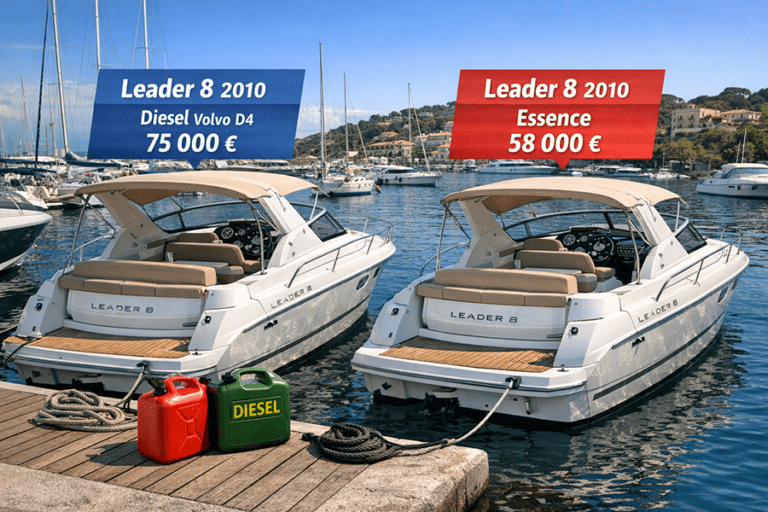
6. D3 or D4: which engine to choose?
For many buyers, the question naturally arises: should they opt for a D3 or a a D4?
- Volvo D3 2.4 L, up to 220 hp, light, responsive, very economical. Ideal for fast, relatively light boats, where weight savings are important.
- Volvo D4 3.7 L, more torque, more power, a block designed from the outset for marine use. More forgiving, often considered more “robust” on heavier heavier units.
In summary: D3 is ideally suited to RIBs, opens and speedboats, while D4 is generally better suited to heavier family boats or intensive programmes. intensive programmes.
7. Conclusion: a powerful but demanding engine
The Volvo Penta D3 is a modern, pleasant engine that performs well, as long as you meet its needs. needs. Well maintained, it offers an excellent compromise between fuel consumption, comfort and performance. Neglected, it can quickly become expensive.
For a seller, documenting the maintenance history is a real plus. For a buyer, being is the best way to secure your investment.
Volvo Penta D3: storia, prestazioni, problemi noti e buone pratiche di manutenzione
Una panoramica completa sul motore Volvo Penta D3: come è nato, quali sono i suoi punti di forza, i problemi più frequenti e come evitarli in fase di acquisto e utilizzo.
Volvo Penta D3: storia, prestazioni, problemi noti e buone pratiche di manutenzione
Una panoramica completa sul motore Volvo Penta D3: come è nato, quali sono i suoi punti di forza, i problemi più frequenti e come evitarli in fase di acquisto e utilizzo.
1. The origins of the Volvo Penta D3
Il Volvo Penta D3 viene introdotto a metà degli anni 2000. Nasce da un motore automobilistico Volvo da 2,4 litri, 5 cilindri, con iniezione common rail, successivamente adattato per l'uso nautico. The aim is to offer a modern, compact, light and quiet diesel for small and medium-sized boats. dimensions.
Lo si trova soprattutto su barche veloci tra i 25 e i 32 piedi, gommoni premium, open sportivi e unità polivalenti dove il rapporto peso/potenza è fondamentale.
2. Le divers potenze disponibili
All versions have the same 2.4-litre block. The differences concern the pressure and turbine management.
- D3-130: 130 HP
- D3-160: 160 HP
- D3-190: 190 HP
- D3-200: 200 HP
- D3-220: 220 HP
Le versioni da 190 e 220 CV sono oggi le più apprezzate, perché offrono un buon equilibrio tra prestazioni e affidabilità.
3. I punti di forza del D3
Nonostante la sua reputazione a volte “delicata”, il D3 ha numerosi vantaggi che spiegano il suo successo sul mercato.
Leggerezza e compattezza
Il D3 è molto leggero in rapporto alla potenza erogata. This has a positive influence on the performance, consumption and behaviour of the boat.
Consumi contenuti
Grazie all'iniezione common rail e alla gestione elettronica, il D3 consuma meno di molti motori engines with similar power. This is an important advantage for fast cruising.
Comfort acustico
Il cinque cilindri offre una sonorità più dolce e “automobilistica” rispetto a classico quattro cilindri. On board, this translates into fewer vibrations and greater comfort.
Carattere brillante
Su gommoni e barche leggere la salita di giri è pronta, con una risposta vivace all'acceleratore.
4. Problemi noti del Volvo D3
Il D3 non è un motore fragile per definizione, ma richiede attenzione. Se trascurato, i suoi punti deboli si manifestano rapidamente.
Gas sensitivity
Il motore è sensibile alla qualità del carburante:
- gasolio vecchio o contaminato nei serbatoi,
- presenza di acqua o batteri,
- filtri non sostituiti con regolarità.
Possibili conseguenze: iniettori danneggiati, pompa alta pressione usurata, avviamenti difficili e irregolare funzionamento.
Turbina che tende a sporcarsi
Una navigazione costante a basso regime non è ideale per il D3. Se il motore non lavora mai ai suoi regimes, la turbina può sporcarsi, con rischio di grippaggio, rumori anomali e perdita di potenza.
Scambiatore e aftercooler trascurati
Lo scambiatore di calore e l'aftercooler devono essere smontati e puliti periodicamente. Una semplice sostituzione del liquido non è sufficiente. Senza un intervento mirato:
- aumenta la temperatura di esercizio,
- cresce il rischio di corrosione interna,
- le prestazioni diminuiscono.
Elettronica sensibile
The D3 needs batteries in perfect condition. Old or undersized batteries can cause causare allarmi e modalità di funzionamento degradate.
Piedi poppieri DPS trascurati
Il motore è spesso abbinato a piedi poppieri DPS. Funzionano molto bene, ma richiedono:
- soffietti in buono stato,
- olio pulito e privo di acqua,
- anodi sostituiti a tempo,
- assenza di corrosione e giochi eccessivi.
5. Come evitare i problemi con un D3
A few basic rules will help you avoid most of the problems and keep your engine running smoothly. lungo.
Tagliando annuale
È fortemente consigliato effettuare un cambio olio ogni anno, anche con poche ore di moto. L'olio invecchia con il tempo, non solo con il numero di ore.
Carburante curato
È opportuno utilizzare gasolio pulito, ben stoccato e, se possibile, con additivo antibatterico, soprattutto quando la barca viene usata poco.
Far lavorare il motore ai regimi corretti
Durante le uscite è utile far lavorare il D3 a un regime adeguato per alcuni minuti, per evitare l'eccessivo deposito di residui nella turbina e migliorare la combustione.
Raffreddamento smontato ogni 3-4 anni
Scambiatore e aftercooler devono essere smontati, controllati e puliti con regolarità. È un punto chiave per la durata del motore.
Suitable and recent batteries
Batterie di qualità, correttamente dimensionate e in buono stato sono essenziali per il corretto funzionamento dell'elettronica.
Manutenzione completa dei piedi poppieri
I piedi DPS richiedono controlli periodici: soffietti, anodi, olio, eventuali giochi meccanici e corrosion. Una manutenzione trascurata può comportare costi elevati.
6. D3 o D4: quale scegliere?
Spesso chi valuta l'acquisto di una barca si chiede se sia meglio un D3 o un D4.
- Volvo D3: 2,4 litri, fino a 220 CV, leggero, brillante, molto efficiente nei consumi. Ideale per barche leggere e veloci.
- Volvo D43.7 liters, greater thickness, superior power, blocking made for boating. Più tollerante e adatto a barche più pesanti e a un utilizzo intensivo.
In sintesi, il D3 è perfetto per gommoni e open rapidi, mentre il D4 è spesso la scelta giusta per heavier family boats or demanding sailing programmes.
7. Conclusioni
Il Volvo Penta D3 è un motore moderno, efficiente e piacevole da usare, a patto di rispettare le sue requirements. Con una manutenzione corretta offre un ottimo equilibrio tra consumi, comfort e performance. Se trascurato, può trasformarsi rapidamente in una fonte di problemi e costi.
For the vendor, having a clear maintenance history is a great added value. For the buyer, knowing the points to check is the best way to make a sensible choice.
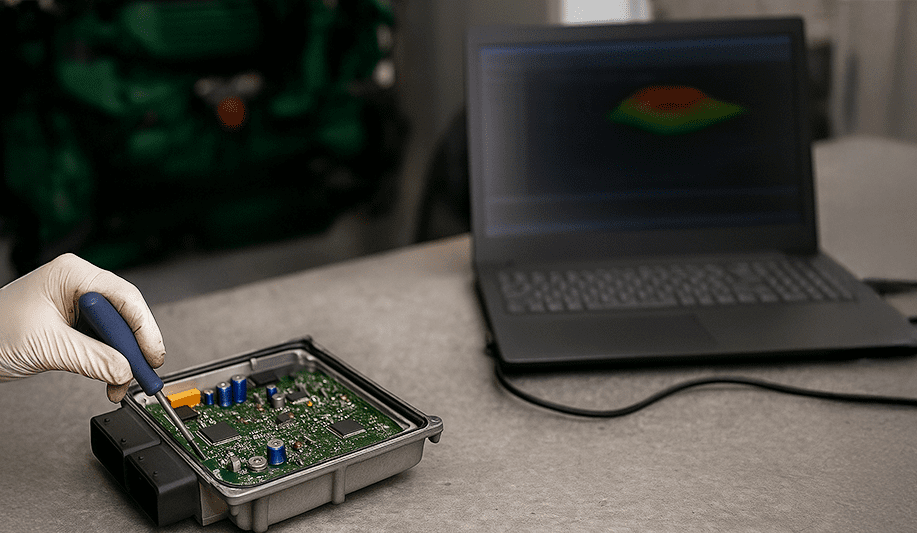
Repair and Reprogramming
of Engine Electronic Control Units (ECUs)
Diesel & Petrol – Inboard & Outboard
• Up to 70% savings thanks to repair rather than replacement
• Accurate diagnostics and a transparent quote before any work is carried out
• Custom reprogramming, tailored to the engine and its operating profile (fuel consumption, power curve, etc.)