Ancrage et amarrage
Ancrage et amarrage : les bases pour dormir tranquille au mouillage
Un bon mouillage ne repose jamais sur un seul équipement. C’est toujours un équilibre entre l’ancre, la chaîne, le guindeau et la manière de s’en servir. Voici un guide complet, clair et concret pour sécuriser le bateau au mouillage comme au port.
Ancrage et amarrage : les bases pour dormir tranquille au mouillage
Quand un bateau navigue, on accepte toujours une part d’imprévu. Mais quand il est immobile, tout doit être parfaitement maîtrisé.
Un mauvais mouillage ou un amarrage mal préparé peut transformer une soirée tranquille en nuit blanche à surveiller le GPS… ou pire, en dérive lente vers le bateau du voisin.
Chez RivieraBroker, nous voyons régulièrement des bateaux très bien équipés, parfois même haut de gamme, mais avec un système de mouillage mal choisi ou mal utilisé. Pourtant, quelques règles simples suffisent à sécuriser sérieusement la situation.
Voici les points essentiels à connaître.
Un bon mouillage est un équilibre
Ancrer un bateau ne consiste pas simplement à jeter une ancre à l’eau.
Un mouillage efficace repose toujours sur un ensemble cohérent composé de plusieurs éléments :
- L’ancre
- La chaîne
- La ligne de mouillage
- Le guindeau
- Et bien sûr la manière dont tout cela est utilisé
Si un seul de ces éléments est sous-dimensionné ou mal adapté au bateau, l’efficacité globale du système diminue rapidement. C’est souvent dans ces situations que l’on voit un bateau commencer à labourer doucement le fond avant de dériver.
Un bon mouillage est donc avant tout une combinaison équilibrée entre équipement et méthode.
Bien choisir son ancre
Le choix de l’ancre dépend principalement du type de fond sur lequel on mouille le plus souvent.
En Méditerranée, les fonds rencontrés sont généralement :
- Sable
- Vase
- Herbiers de posidonie
- Fonds mixtes sable et roche
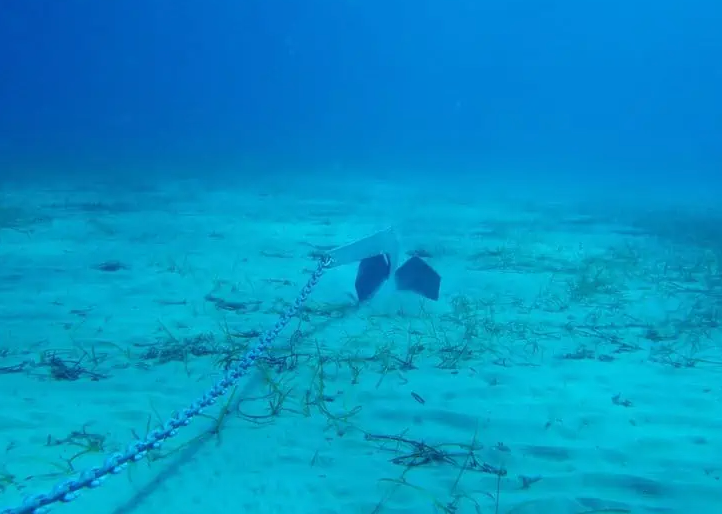
Sur sable ou vase, les ancres capables de s’enfouir profondément donnent d’excellents résultats. Les modèles type charrue ou pelle restent des valeurs sûres et largement utilisées.
Sur les fonds mixtes, les ancres modernes à géométrie auto-orientante sont souvent plus efficaces. Elles ont la capacité de se repositionner rapidement lorsque la direction de traction change sous l’effet du vent ou du courant.
Depuis une quinzaine d’années, plusieurs modèles de nouvelle génération se sont imposés. Leur forme concave permet une prise rapide dans le fond et une tenue très stable, même lorsque le bateau pivote autour de son mouillage.
Ces ancres sont plus coûteuses, mais pour un bateau utilisé régulièrement au mouillage, l’investissement est généralement justifié.
Le guindeau : un outil, pas un treuil
Le guindeau est un équipement essentiel, mais il est souvent mal utilisé.
Son rôle est simplement de descendre et de remonter la ligne de mouillage. Il n’est pas conçu pour tirer un bateau de plusieurs tonnes vers son ancre.
Une bonne pratique consiste à laisser l’ancre descendre par gravité en contrôlant la chaîne avec la friction du guindeau. Cela évite de solliciter inutilement le moteur et la mécanique.
Pour la remontée, il faut toujours avancer doucement vers l’ancre avec le bateau. Le guindeau ne fait alors que récupérer la chaîne.
Ce détail peut paraître évident, mais il joue un rôle important dans la durée de vie de l’équipement.
La chaîne : un élément souvent sous-estimé
La chaîne remplit deux fonctions essentielles :
- Elle apporte du poids à la ligne de mouillage
- Elle maintient l’ancre dans le bon angle de traction
Sur la plupart des bateaux de croisière, les diamètres les plus courants sont :
- 8 mm
- 10 mm
- 12 mm
Le choix dépend principalement de la taille et du déplacement du bateau.
Une chaîne plus lourde améliore le comportement du mouillage, notamment lorsque la mer se forme ou que le vent se renforce.
Les chaînes galvanisées sont les plus répandues car elles offrent un bon compromis entre coût et durabilité. Les chaînes inox résistent mieux à la corrosion et sont plus esthétiques, mais leur prix reste nettement plus élevé.
Dans tous les cas, il est important de vérifier régulièrement l’état des maillons, en particulier près de l’ancre où les frottements sont les plus importants.
Un détail souvent oublié
Une fois l’ancre posée et la chaîne filée, la charge ne doit jamais rester sur le guindeau.
La tension doit être transférée sur une bitta à l’aide d’un bout d’amarrage ou d’un crochet de mouillage. Le guindeau ne doit travailler que pendant les phases de descente et de remontée.
C’est un détail simple, mais il évite une usure inutile et prolonge la durée de vie du matériel.
Longueur de chaîne à avoir à bord
Il faut distinguer deux choses :
- La longueur totale de chaîne à bord
- La longueur réellement mouillée
Ces deux notions sont différentes.
Pour un bateau de croisière, les recommandations générales situent la longueur de chaîne entre 70 et 120 mètres, selon la taille du bateau et la zone de navigation.
En Méditerranée, les bateaux de 10 à 15 mètres disposent le plus souvent de :
- 50 à 80 mètres de chaîne
- Parfois 100 mètres sur les bateaux qui mouillent souvent
Cette longueur peut sembler importante, mais certaines rades dépassent facilement 15 à 20 mètres de profondeur. Il faut donc suffisamment de chaîne pour conserver un bon angle de traction sur l’ancre.
La règle essentielle : le ratio profondeur / chaîne
La longueur de chaîne à mouiller dépend de la profondeur totale.
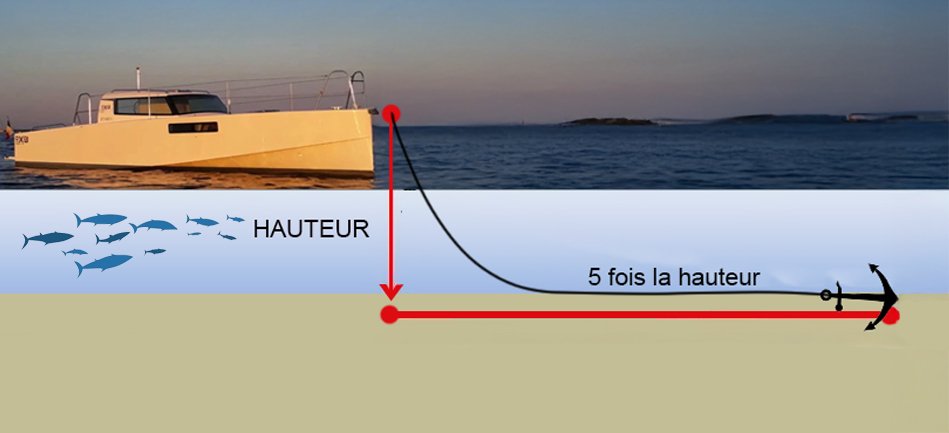
On doit toujours prendre en compte : profondeur de l’eau + hauteur de l’étrave.
Le ratio entre cette hauteur totale et la longueur de chaîne s’appelle le scope.
En conditions normales, la règle de base consiste à mouiller cinq fois la profondeur totale.
Exemple :
Profondeur : 6 m
Hauteur de l’étrave : 1 m
Hauteur totale : 7 m
Longueur de chaîne recommandée : 7 × 5 = 35 mètres
Adapter la longueur selon les conditions
| Situation | Ratio recommandé |
|---|---|
| Arrêt rapide | 3 × |
| Mouillage normal | 5 × |
| Nuit au mouillage | 7 × |
| Vent fort | 8 à 10 × |
Ces ratios permettent de conserver une traction presque horizontale sur l’ancre, condition indispensable pour garantir sa tenue.
Exemple concret
Prenons un cas typique en Méditerranée.
Profondeur : 8 m
Hauteur de l’étrave : 1 m
Hauteur totale : 9 m
Longueur de chaîne nécessaire :
- Mouillage normal : 45 m
- Nuit au mouillage : 63 m
- Vent fort : 72 m
Avec seulement 40 mètres de chaîne, on est déjà limite dans ce type de situation.
Pourquoi cette longueur est indispensable
La chaîne forme naturellement une courbe appelée caténaire.
Cette courbe joue un rôle important :
- Elle maintient la traction horizontale sur l’ancre
- Elle amortit les efforts du vent et de la houle
- Elle évite que l’ancre se décroche
Lorsque la chaîne est trop courte, la traction devient verticale. L’ancre peut alors arracher le fond et le bateau commence à dériver.
C’est la cause principale des bateaux qui chassent au mouillage.
Une autre règle simple
Certains marins utilisent aussi une règle empirique : la longueur minimale de chaîne doit être au moins équivalente à la longueur du bateau.
Par exemple : bateau de 12 mètres → minimum 12 mètres de chaîne.
Cette règle concernait surtout les anciens montages combinant chaîne et cordage. Aujourd’hui, la plupart des bateaux de croisière utilisent une ligne entièrement en chaîne.
Dimensionnement du mouillage selon la taille du bateau
Ces valeurs correspondent aux pratiques courantes en Méditerranée, basées sur les recommandations de fabricants d’ancres et de guides nautiques.
| Longueur bateau | Poids ancre | Chaîne | Longueur chaîne |
|---|---|---|---|
| 6 – 8 m | 8 – 10 kg | 6 mm | 40 – 50 m |
| 8 – 10 m | 10 – 15 kg | 6 – 8 mm | 50 – 60 m |
| 10 – 12 m | 15 – 20 kg | 8 mm | 60 – 80 m |
| 12 – 14 m | 20 – 25 kg | 8 – 10 mm | 80 – 100 m |
| 14 – 18 m | 25 – 35 kg | 10 mm | 100 m |
| 18 – 24 m | 40 – 60 kg | 12 mm | 100 – 120 m |
Ces valeurs peuvent varier selon le déplacement du bateau, la zone de navigation et le type d’ancre.
La règle simple des vieux marins
Quand on ne veut pas sortir la calculatrice, il existe une règle empirique assez fiable : mouiller plus de chaîne que les voisins.
Curieusement, c’est presque toujours celui qui a le plus de chaîne à l’eau qui dort le mieux la nuit.
Surveiller son mouillage
La plupart des traceurs GPS proposent aujourd’hui une alarme de mouillage.
Le principe est simple : on définit un rayon de sécurité autour du point d’ancrage. Si le bateau sort de cette zone, une alarme se déclenche.
Cet outil est très utile la nuit ou dans une rade fréquentée.
Mais rien ne remplace un réflexe simple : prendre quelques repères visuels à terre pour vérifier que le bateau ne bouge pas.
L’amarrage au port
L’amarrage fonctionne différemment du mouillage.
Dans un port, les efforts sont transférés vers des structures fixes : quai, ponton ou corps-mort.
Les amarres doivent donc absorber :
- Les variations de vent
- La houle de passage
- Les mouvements des autres bateaux
Pour cela, elles doivent combiner résistance et élasticité.
Les bittes et leur position
Les bittes sont les points d’ancrage des amarres sur le bateau.
Elles doivent être solidement installées et correctement dimensionnées. Leur position influence directement l’angle des amarres et la répartition des efforts.
Une bitta bien placée permet de travailler avec des angles efficaces et de répartir les charges sur plusieurs lignes.
C’est un détail d’architecture souvent invisible, mais essentiel.
Les pare-battages
Les pare-battages constituent la première protection entre la coque et le quai.
Les modèles cylindriques classiques restent les plus utilisés car ils absorbent efficacement les chocs et conviennent bien aux escales prolongées.
Les modèles gonflables ou pliables sont plus faciles à ranger, mais sont surtout utilisés lorsque l’espace de stockage est limité.
Les housses de pare-battage permettent également de réduire l’abrasion et de protéger le gelcoat.
Les aides à la manœuvre
Les aides à la manœuvre ont beaucoup évolué ces dernières années.
Le propulseur d’étrave permet de déplacer latéralement l’avant du bateau lors des manœuvres de port. Sur les unités plus importantes, un propulseur de poupe peut être ajouté pour améliorer encore le contrôle.
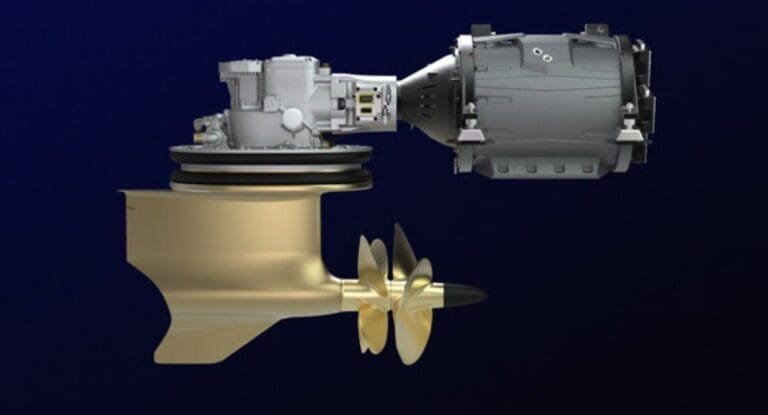
Certains systèmes modernes permettent même de manœuvrer avec un joystick. Grâce à des transmissions orientables, le bateau peut alors se déplacer latéralement, pivoter sur place et se positionner avec une grande précision.
Ces technologies simplifient considérablement les manœuvres, notamment dans les ports étroits ou par vent traversier.
En conclusion
Un mouillage sûr ou un amarrage fiable ne dépend jamais d’un seul équipement. C’est toujours le résultat d’un ensemble cohérent entre matériel et bonnes pratiques.
Une ancre adaptée, une chaîne correctement dimensionnée, un guindeau utilisé correctement et quelques habitudes simples permettent d’éviter la plupart des problèmes.
Et au final, l’objectif reste toujours le même : passer une nuit tranquille au mouillage… sans se réveiller toutes les heures pour vérifier si le bateau bouge.
Retour en hautAncoraggio e ormeggio: le basi per dormire tranquilli in rada
Quando una barca naviga, si accetta sempre una parte di imprevisto. Ma quando è ferma, tutto deve essere perfettamente sotto controllo.
Un ancoraggio sbagliato o un ormeggio preparato male può trasformare una serata tranquilla in una notte insonne passata a controllare il GPS… o peggio, in una lenta deriva verso la barca vicina.
Da RivieraBroker vediamo spesso barche molto ben equipaggiate, a volte anche di livello alto, ma con un sistema di ancoraggio scelto male o usato male. Eppure bastano poche regole semplici per rendere la situazione davvero più sicura.
Ecco i punti essenziali da conoscere.
Un buon ancoraggio è un equilibrio
Ancorare una barca non significa semplicemente buttare l’ancora in acqua.
Un ancoraggio efficace nasce sempre da un insieme coerente di elementi:
- L’ancora
- La catena
- La linea di ancoraggio
- Il verricello salpa ancora
- E naturalmente il modo in cui tutto questo viene usato
Se anche uno solo di questi elementi è sottodimensionato o non adatto alla barca, l’efficacia complessiva del sistema cala rapidamente. È proprio in questi casi che si vede una barca iniziare ad arare il fondo e poi a derivare.
Un buon ancoraggio è quindi, prima di tutto, un equilibrio tra attrezzatura e metodo.
Scegliere bene l’ancora
La scelta dell’ancora dipende soprattutto dal tipo di fondale su cui si ancora più spesso.
Nel Mediterraneo i fondali più comuni sono:
- Sabbia
- Fango
- Praterie di posidonia
- Fondi misti sabbia e roccia
Su sabbia o fango, le ancore capaci di penetrare bene nel fondale offrono risultati eccellenti. I modelli tipo aratro o pala restano soluzioni molto affidabili e diffuse.
Sui fondi misti, le ancore moderne con geometria auto-orientante sono spesso più efficaci. Riescono a riposizionarsi rapidamente quando la direzione del tiro cambia per effetto del vento o della corrente.
Negli ultimi quindici anni si sono affermati diversi modelli di nuova generazione. La loro forma concava favorisce una presa rapida e una tenuta molto stabile, anche quando la barca ruota intorno al punto di ancoraggio.
Sono ancore più costose, ma per una barca che passa tempo in rada, l’investimento è in genere ben giustificato.
Il salpa ancora: uno strumento, non un verricello di trazione
Il salpa ancora è un elemento fondamentale, ma viene spesso usato male.
Il suo compito è semplicemente calare e recuperare la linea di ancoraggio. Non è progettato per tirare una barca di diverse tonnellate verso la propria ancora.
La pratica corretta consiste nel lasciare scendere l’ancora per gravità, controllando la catena con la frizione del verricello. In questo modo si evitano sforzi inutili sul motore e sulla meccanica.
Durante il recupero, invece, bisogna sempre avanzare lentamente verso l’ancora con la barca. Il salpa ancora deve limitarsi a recuperare la catena.
Può sembrare un dettaglio, ma incide molto sulla durata dell’impianto.
La catena: un elemento spesso sottovalutato
La catena svolge due funzioni essenziali:
- Dà peso alla linea di ancoraggio
- Mantiene l’ancora con il giusto angolo di trazione
Sulla maggior parte delle barche da crociera, i diametri più comuni sono 8 mm, 10 mm e 12 mm.
La scelta dipende soprattutto dalla dimensione e dal dislocamento della barca.
Una catena più pesante migliora il comportamento dell’ancoraggio, soprattutto quando il mare si forma o il vento aumenta.
Le catene zincate restano le più diffuse perché offrono un buon compromesso tra costo e durata. Le catene inox resistono meglio alla corrosione e sono più belle da vedere, ma il loro costo è nettamente superiore.
In ogni caso, è importante controllare regolarmente lo stato delle maglie, soprattutto vicino all’ancora dove gli sfregamenti sono più intensi.
Un dettaglio spesso dimenticato
Una volta che l’ancora è posata e la catena è filata, il carico non deve mai restare sul salpa ancora.
La tensione va trasferita su una bitta con l’aiuto di una cima o di un gancio di ancoraggio. Il salpa ancora deve lavorare soltanto nelle fasi di calata e recupero.
È un dettaglio semplice, ma evita usura inutile e allunga la vita del materiale.
Lunghezza della catena da avere a bordo
Bisogna distinguere tra due cose:
- La lunghezza totale di catena a bordo
- La lunghezza realmente filata in acqua
Non sono la stessa cosa.
Per una barca da crociera, le raccomandazioni generali indicano una lunghezza totale compresa tra 70 e 120 metri, a seconda della dimensione della barca e della zona di navigazione.
Nel Mediterraneo, le barche tra 10 e 15 metri hanno spesso:
- Da 50 a 80 metri di catena
- Talvolta 100 metri sulle unità che ancorano spesso
Può sembrare tanto, ma in molte rade si ancora facilmente su 15 o 20 metri d’acqua. Serve quindi abbastanza catena per mantenere il giusto angolo di tiro sull’ancora.
La regola fondamentale: rapporto profondità / catena
La lunghezza di catena da filare dipende dalla profondità totale.
Bisogna sempre considerare: profondità dell’acqua + altezza della prua.
Il rapporto tra questa altezza totale e la lunghezza di catena si chiama scope.
In condizioni normali, la regola base è filare cinque volte la profondità totale.
Esempio:
Profondità: 6 m
Altezza della prua: 1 m
Altezza totale: 7 m
Lunghezza di catena consigliata: 7 × 5 = 35 metri
Adattare la lunghezza alle condizioni
| Situazione | Rapporto consigliato |
|---|---|
| Sosta breve | 3 × |
| Ancoraggio normale | 5 × |
| Notte in rada | 7 × |
| Vento forte | 8 a 10 × |
Questi rapporti permettono di mantenere una trazione quasi orizzontale sull’ancora, condizione indispensabile per garantire la tenuta.
Esempio concreto
Prendiamo un caso tipico nel Mediterraneo.
Profondità: 8 m
Altezza della prua: 1 m
Altezza totale: 9 m
Lunghezza di catena necessaria:
- Ancoraggio normale: 45 m
- Notte in rada: 63 m
- Vento forte: 72 m
Con solo 40 metri di catena si è già al limite in una situazione del genere.
Perché questa lunghezza è indispensabile
La catena forma naturalmente una curva chiamata catenaria.
Questa curva ha un ruolo importante:
- Mantiene la trazione orizzontale sull’ancora
- Assorbe gli sforzi del vento e della risacca
- Evita che l’ancora si sganci
Quando la catena è troppo corta, la trazione diventa verticale. L’ancora può allora strappare il fondale e la barca comincia a derivare.
È la causa principale delle barche che arano in rada.
Un’altra regola semplice
Alcuni navigatori usano anche una regola empirica: la lunghezza minima di catena dovrebbe essere almeno pari alla lunghezza della barca.
Per esempio: barca di 12 metri → almeno 12 metri di catena.
Questa regola riguardava soprattutto i vecchi montaggi con catena e cima. Oggi la maggior parte delle barche da crociera usa una linea interamente in catena.
Dimensionamento del sistema di ancoraggio in base alla dimensione della barca
Questi valori corrispondono alle pratiche più comuni nel Mediterraneo.
| Lunghezza barca | Peso ancora | Catena | Lunghezza catena |
|---|---|---|---|
| 6 – 8 m | 8 – 10 kg | 6 mm | 40 – 50 m |
| 8 – 10 m | 10 – 15 kg | 6 – 8 mm | 50 – 60 m |
| 10 – 12 m | 15 – 20 kg | 8 mm | 60 – 80 m |
| 12 – 14 m | 20 – 25 kg | 8 – 10 mm | 80 – 100 m |
| 14 – 18 m | 25 – 35 kg | 10 mm | 100 m |
| 18 – 24 m | 40 – 60 kg | 12 mm | 100 – 120 m |
Questi valori possono variare a seconda del dislocamento della barca, della zona di navigazione e del tipo di ancora.
La regola semplice dei vecchi marinai
Quando non si ha voglia di fare calcoli, esiste una regola empirica abbastanza affidabile: filare più catena dei vicini.
Curiosamente, è quasi sempre chi ha più catena in acqua che dorme meglio la notte.
Controllare il proprio ancoraggio
Oggi la maggior parte dei plotter GPS propone un allarme di ancoraggio.
Il principio è semplice: si definisce un raggio di sicurezza intorno al punto di ancoraggio. Se la barca esce da questa zona, scatta un allarme.
È uno strumento molto utile di notte o in una rada affollata.
Ma niente sostituisce un riflesso semplice: prendere alcuni riferimenti visivi a terra per verificare che la barca non si sposti.
L’ormeggio in porto
L’ormeggio segue una logica diversa rispetto all’ancoraggio.
In porto, gli sforzi vengono trasferiti verso strutture fisse: banchina, pontile o corpo morto.
Le cime di ormeggio devono quindi assorbire:
- Le variazioni di vento
- La risacca di passaggio
- I movimenti delle altre imbarcazioni
Per questo devono combinare resistenza ed elasticità.
Le bitte e la loro posizione
Le bitte sono i punti di fissaggio delle cime sulla barca.
Devono essere solidamente installate e correttamente dimensionate. La loro posizione influisce direttamente sull’angolo delle cime e sulla ripartizione degli sforzi.
Una bitta ben posizionata permette di lavorare con angoli corretti e di distribuire il carico su più linee.
È un dettaglio spesso invisibile, ma essenziale.
I parabordi
I parabordi costituiscono la prima protezione tra lo scafo e la banchina.
I modelli cilindrici classici restano i più usati perché assorbono bene gli urti e sono adatti alle soste prolungate.
I modelli gonfiabili o pieghevoli si stivano più facilmente, ma vengono usati soprattutto quando lo spazio è limitato.
Le calze copriparabordo aiutano inoltre a ridurre l’abrasione e a proteggere il gelcoat.
Gli aiuti alla manovra
Negli ultimi anni gli aiuti alla manovra si sono evoluti molto.
Il bow thruster permette di spostare lateralmente la prua durante le manovre in porto. Sulle barche più grandi si può aggiungere anche un thruster di poppa per aumentare il controllo.
Alcuni sistemi moderni consentono perfino di manovrare con un joystick. Grazie a trasmissioni orientabili, la barca può spostarsi lateralmente, ruotare su sé stessa e posizionarsi con grande precisione.
Queste tecnologie semplificano molto le manovre, soprattutto nei porti stretti o con vento al traverso.
Conclusione
Un ancoraggio sicuro o un ormeggio affidabile non dipendono mai da un solo componente. Sono sempre il risultato di un insieme coerente tra attrezzatura e buone pratiche.
Un’ancora adatta, una catena ben dimensionata, un salpa ancora usato correttamente e alcune abitudini semplici permettono di evitare la maggior parte dei problemi.
E alla fine l’obiettivo è sempre lo stesso: passare una notte tranquilla in rada, senza svegliarsi ogni ora per controllare se la barca si è spostata.
Torna in altoAnchoring and mooring: the essentials for sleeping well at anchor
When a boat is underway, a certain amount of unpredictability is part of the game. But when the boat is stationary, everything needs to be properly under control.
A poor anchoring setup or a badly prepared mooring can turn a quiet evening into a sleepless night spent watching the GPS… or worse, into a slow drift toward the next boat.
At RivieraBroker, we regularly see boats that are very well equipped, sometimes even high-end, but fitted with anchoring systems that are poorly chosen or poorly used. In reality, a few simple rules are often enough to make things much safer.
Here are the key points to understand.
Good anchoring is all about balance
Anchoring a boat is not just a matter of throwing the anchor overboard.
An effective anchoring setup always relies on a coherent combination of elements:
- The anchor
- The chain
- The anchoring line
- The windlass
- And, of course, the way all of it is used
If just one of these elements is undersized or not suited to the boat, the efficiency of the whole system drops quickly. That is usually when a boat starts slowly ploughing the seabed before drifting away.
Good anchoring is therefore above all a proper balance between equipment and technique.
Choosing the right anchor
The choice of anchor depends mainly on the type of seabed where the boat is anchored most often.
In the Mediterranean, the most common seabeds are:
- Sand
- Mud
- Posidonia seagrass
- Mixed sand and rock bottoms
On sand or mud, anchors that dig in deeply usually perform very well. Plough-type and scoop-type anchors remain proven and widely used solutions.
On mixed bottoms, modern self-righting anchors are often more effective. They can reset quickly when the direction of pull changes because of wind or current.
Over the past fifteen years, several new-generation models have become very popular. Their concave shape helps them set quickly and hold very firmly, even when the boat swings around its anchor.
These anchors are more expensive, but for a boat that spends time at anchor, the investment is generally worthwhile.
The windlass: a tool, not a towing winch
The windlass is an essential piece of equipment, but it is often used incorrectly.
Its role is simply to lower and retrieve the anchoring line. It is not designed to drag several tonnes of boat toward the anchor.
The correct method is to let the anchor go down by gravity while controlling the chain with the windlass clutch. This avoids unnecessary strain on the motor and the gearbox.
When retrieving, the boat should always move slowly toward the anchor. The windlass should only be recovering the chain.
It may sound obvious, but this detail makes a real difference to the service life of the equipment.
The chain: often underestimated
The chain has two essential functions:
- It adds weight to the anchoring line
- It keeps the anchor at the correct angle of pull
On most cruising boats, the most common chain diameters are 8 mm, 10 mm and 12 mm.
The correct size depends mainly on the size and displacement of the boat.
A heavier chain improves anchoring behaviour, especially when the sea builds up or the wind increases.
Galvanized chains remain the most common because they offer a good balance between price and durability. Stainless steel chains resist corrosion better and look smarter, but they are significantly more expensive.
In all cases, the links should be checked regularly, especially close to the anchor where wear is greatest.
A detail that is often forgotten
Once the anchor is set and the chain has been paid out, the load should never remain on the windlass.
The tension should be transferred to a cleat using a line or an anchor snubber. The windlass should only work during lowering and retrieval.
It is a simple detail, but it prevents unnecessary wear and helps the equipment last longer.
How much chain to carry on board
Two things need to be clearly distinguished:
- The total amount of chain carried on board
- The actual amount of chain paid out into the water
These are not the same thing.
For a cruising boat, general recommendations place the total chain length somewhere between 70 and 120 metres, depending on boat size and cruising area.
In the Mediterranean, boats between 10 and 15 metres often carry:
- 50 to 80 metres of chain
- Sometimes 100 metres on boats that anchor frequently
This may sound like a lot, but many anchorages are easily 15 to 20 metres deep. Sufficient chain is therefore needed to keep the anchor working at the right angle.
The essential rule: depth-to-chain ratio
The amount of chain to pay out depends on the total depth.
You must always take into account: water depth + bow height above the water.
The ratio between this total height and the chain length is called the scope.
In normal conditions, the basic rule is to pay out five times the total depth.
Example:
Depth: 6 m
Bow height: 1 m
Total height: 7 m
Recommended chain length: 7 × 5 = 35 metres
Adjusting the length to the conditions
| Situation | Recommended ratio |
|---|---|
| Short stop | 3 × |
| Normal anchoring | 5 × |
| Overnight anchoring | 7 × |
| Strong wind | 8 to 10 × |
These ratios help maintain an almost horizontal pull on the anchor, which is essential for reliable holding.
A practical example
Let’s take a typical Mediterranean case.
Depth: 8 m
Bow height: 1 m
Total height: 9 m
Required chain length:
- Normal anchoring: 45 m
- Overnight anchoring: 63 m
- Strong wind: 72 m
With only 40 metres of chain, you are already on the limit in that kind of situation.
Why this length matters
The chain naturally forms a curve known as a catenary.
This curve plays an important role:
- It keeps the pull on the anchor horizontal
- It absorbs loads caused by wind and wave action
- It helps prevent the anchor from breaking out
If the chain is too short, the pull becomes vertical. The anchor may then break free from the seabed and the boat starts to drift.
This is the main reason why boats drag at anchor.
Another simple rule
Some sailors also use a rough rule of thumb: the minimum chain length should be at least equal to the length of the boat.
For example: 12-metre boat → at least 12 metres of chain.
This rule mostly came from older chain-and-rope setups. Today, most cruising boats use an all-chain anchoring line.
Anchoring setup by boat size
These values reflect common Mediterranean practice.
| Boat length | Anchor weight | Chain | Chain length |
|---|---|---|---|
| 6 – 8 m | 8 – 10 kg | 6 mm | 40 – 50 m |
| 8 – 10 m | 10 – 15 kg | 6 – 8 mm | 50 – 60 m |
| 10 – 12 m | 15 – 20 kg | 8 mm | 60 – 80 m |
| 12 – 14 m | 20 – 25 kg | 8 – 10 mm | 80 – 100 m |
| 14 – 18 m | 25 – 35 kg | 10 mm | 100 m |
| 18 – 24 m | 40 – 60 kg | 12 mm | 100 – 120 m |
These values may vary depending on displacement, cruising area and anchor type.
The old sailor’s rule
If you do not want to start calculating, there is a rough rule that is often surprisingly reliable: pay out more chain than the boats around you.
Strangely enough, the boat with the most chain in the water is usually the one whose crew sleeps best at night.
Monitoring your anchorage
Most modern GPS plotters now include an anchor alarm.
The principle is simple: you set a safety radius around the anchor position. If the boat moves outside that area, the alarm goes off.
It is a very useful feature at night or in a crowded anchorage.
Still, nothing replaces a simple habit: taking a few visual bearings ashore to make sure the boat is not moving.
Mooring in port
Mooring follows a different logic from anchoring.
In port, the loads are transferred to fixed structures such as a quay, pontoon or mooring block.
Mooring lines therefore need to absorb:
- Changes in wind
- Passing wash or surge
- The movement of nearby boats
To do that properly, they need both strength and elasticity.
Cleats and their position
Cleats are the fixing points for mooring lines on the boat.
They need to be properly installed and correctly sized. Their position has a direct effect on line angles and load distribution.
A well-positioned cleat allows the loads to be spread across several lines with better working angles.
It is often an invisible design detail, but it is essential.
Fenders
Fenders are the first line of protection between the hull and the quay.
Classic cylindrical fenders remain the most widely used because they absorb impacts well and are perfectly suited to longer stays alongside.
Inflatable or foldable models are easier to store, but they are mostly used where storage space is limited.
Fender covers also help reduce abrasion and protect the gelcoat.
Manoeuvring aids
Manoeuvring aids have evolved a lot in recent years.
A bow thruster allows the bow to move sideways during harbour manoeuvres. On larger boats, a stern thruster can be added for even better control.
Some modern systems even allow the boat to be manoeuvred with a joystick. Thanks to steerable drives, the boat can move sideways, spin on the spot and position itself with impressive precision.
These technologies make harbour manoeuvres much easier, especially in tight spaces or with a crosswind.
Conclusion
Safe anchoring or reliable mooring never depends on a single piece of equipment. It is always the result of a coherent combination of gear and good practice.
A suitable anchor, properly sized chain, correct windlass use and a few simple habits will prevent most problems.
And in the end, the goal is always the same: a quiet night at anchor without waking up every hour to check whether the boat has moved.
Back to top